For businesses · OFFICE ACTION
You received an Office Action
An Office Action is the examining attorney’s position, not the end of your application. Most pre-registration Office Actions give you three months to respond, with a one-time three-month extension available for a fee. Section 66(a) Madrid applications generally get six months with no extension, and some other actions run to different periods. Your Office Action states the deadline that applies to you. Start by finding your refusal below.
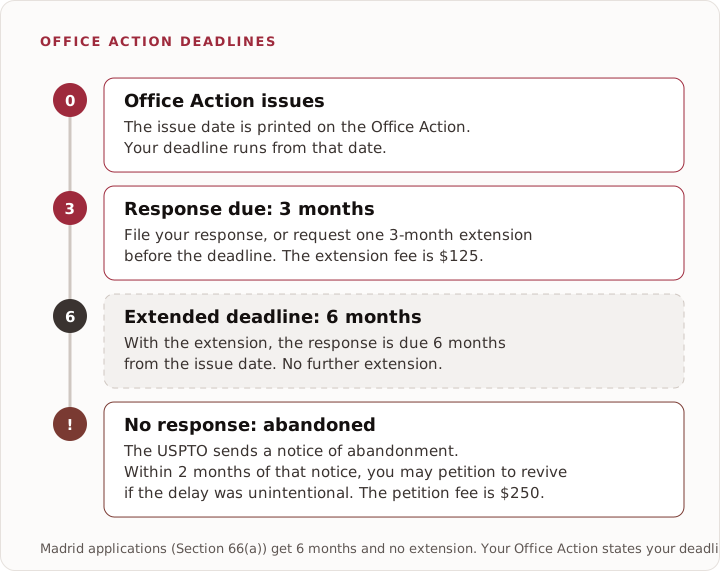
For most Section 1 and Section 44 applications, you have three months from the issue date to respond, with one three-month extension for a fee. Other actions can have different deadlines; follow the one stated in your Office Action. If no response is filed, the application is abandoned; a petition to revive is generally due within two months of the notice of abandonment.
Step 1 — Which refusal did you get?
It is printed at the top of the letter. You may have more than one.
Step 2 — What it means
Likelihood of confusion · Section 2(d)
The examining attorney found a registered mark they think is too close to yours, on goods they think are related.
Start with the examining attorney’s evidence. It shows why the USPTO considers the marks similar, why it considers the goods or services related, and what the refusal is actually built on.
Step 3 — What the Board has done with it
In the Section 2(d) decisions coded in this library, similarity of the marks and relatedness of the goods or services are the factors most often identified as driving the result.
Step 4 — Decide how to handle it
Handle it yourself
Read the examining attorney’s evidence, read the page on your refusal, and file through TEAS. Some requirements are straightforward to correct yourself. Substantive refusals may need evidence and legal argument. If you are domiciled outside the United States, you cannot respond yourself; the USPTO requires a U.S.-licensed attorney.
Have an attorney review it
An attorney reviews the refusal and tells you what it turns on, what evidence would move it, and whether it is worth fighting. Provided by Valet Law, PLLC.
Keep the specifics of your situation out of public tools. Your first message to Valet Law should identify the parties and the general issue only. Wait until Valet Law confirms it can discuss the matter before sending confidential details.
Who checked this
Reviewed and approved by Brandon Leavitt on 2026-10-02.